
Graphology Tips to Accelerate Your Child’s Learning
Hello Reader!
Welcome to the blog page of Graphology, the Best Graphology Institute in Kolkata.
Every parent wants to see their child learn faster, concentrate better, and develop confidence in academics. However, every child has a unique learning style, personality, attention span, and way of responding to challenges. Understanding these individual characteristics can help parents and educators create a more supportive learning environment.
Graphology, the study of handwriting and handwriting patterns, is sometimes used as a complementary tool for understanding behavioural and personality tendencies. At the Best Graphology Institute in Kolkata, graphology is taught as a structured method of observing handwriting characteristics and interpreting them carefully rather than treating handwriting as a diagnostic tool.
When used responsibly, handwriting observation can encourage children to become more aware of habits such as concentration, organisation, consistency, confidence, and writing discipline. These factors can indirectly support better Child’s learning when combined with appropriate educational methods.
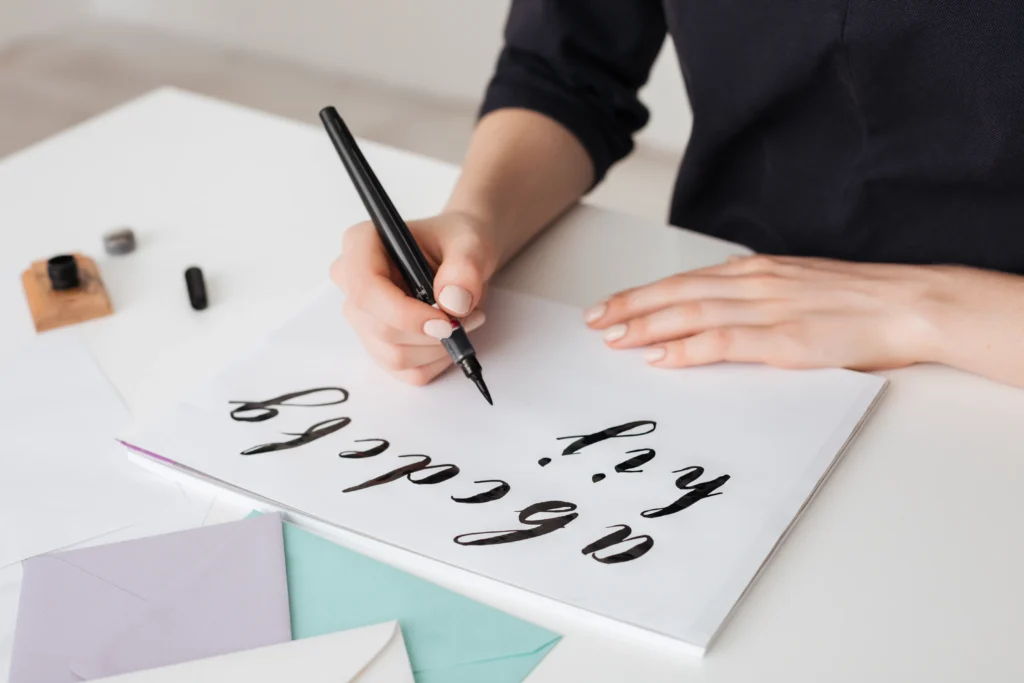
What Is Graphology?
Graphology refers to the analysis of handwriting characteristics to explore certain personality and behavioural tendencies. It may examine features such as:
- Letter size
- Slant of handwriting
- Spacing between words and letters
- Writing pressure
- Baseline
- Margins
- Letter formations
- Writing speed
- Consistency of handwriting
- Overall organisation of the written page
The Best Graphology Institute in Kolkata teaches students to observe these features systematically instead of making conclusions from a single handwriting characteristic.
It is important to understand that graphology should not be used to diagnose learning disabilities, mental health conditions, or medical problems. For genuine learning difficulties, parents should consult qualified teachers, educational psychologists, paediatricians, or other appropriate professionals.
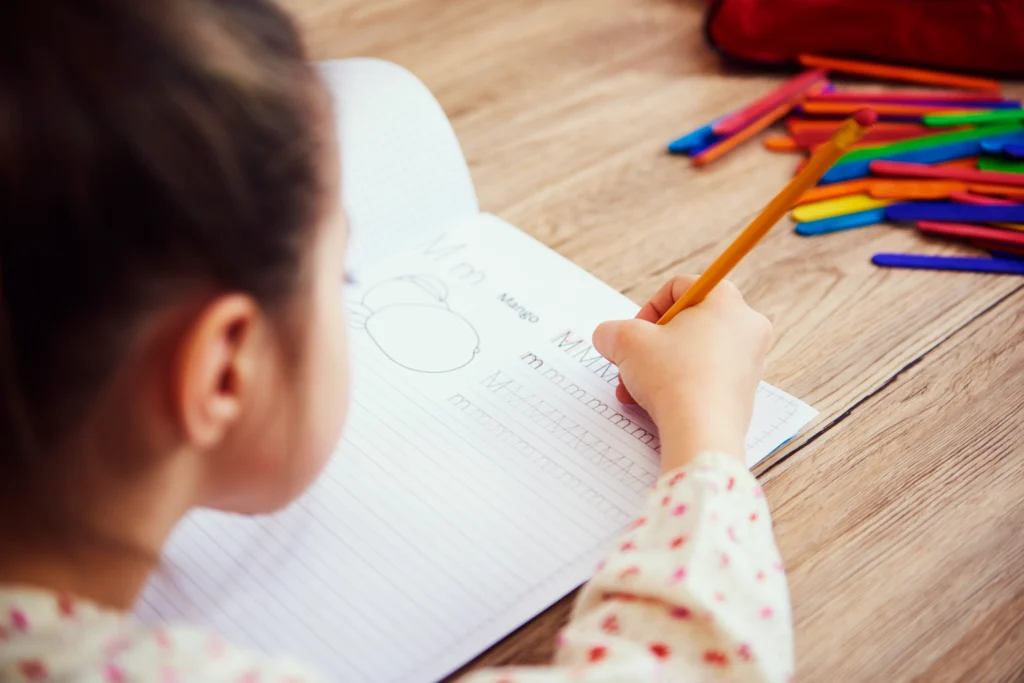
How Handwriting Habits Can Relate to Child’s Learning
Writing is an important part of childhood education. Children use handwriting while taking notes, completing assignments, answering questions, practising spelling, solving mathematical problems, and expressing their ideas.
Good writing habits can encourage children to become more organised and attentive to their work. This is why handwriting practice can be included as one component of a broader strategy for improving Child’s learning.
For example, a child who learns to maintain consistent spacing and write carefully may also become more conscious of presenting schoolwork neatly. Similarly, practising regularly can encourage discipline and consistency.
These are behavioural learning habits rather than guaranteed effects of handwriting itself.
1. Encourage Consistent Handwriting Practice
Regular writing practice can help children become more comfortable with the physical process of writing.
Parents can introduce short writing sessions rather than expecting children to write for long periods. A simple 10–15 minute daily practice routine can include:
- Copying a short paragraph
- Writing a few sentences
- Maintaining a personal journal
- Practising difficult letters
- Writing new vocabulary
- Completing short creative-writing exercises
Consistency is often more useful than forcing a child to write for extended periods.
At the Best Graphology Institute in Kolkata, handwriting is studied systematically, and children can be encouraged to develop awareness of their writing habits without turning practice into a stressful activity.

2. Focus on Concentration During Writing
Concentration plays an important role in Child’s learning. Children can easily become distracted, particularly when they are tired or overwhelmed.
Parents can create a distraction-free writing environment by:
- Keeping unnecessary gadgets away
- Providing adequate lighting
- Maintaining a comfortable study space
- Setting short study goals
- Giving children regular breaks
- Avoiding excessive pressure
Handwriting activities can become a useful opportunity to practise sustained attention.
Instead of saying, “Write perfectly,” parents can say, “Let’s focus carefully on these five lines.” Small goals can make learning feel more manageable.
3. Develop Better Spacing and Organisation
Spacing between words, letters, and lines is one of the features observed in handwriting analysis.
From an educational perspective, teaching children to maintain appropriate spacing can make their written work easier to read. It can also encourage them to pay attention to the organisation of information on a page.
Parents can teach children to:
- Leave appropriate spaces between words
- Follow ruled lines
- Maintain consistent margins
- Avoid overcrowding the page
- Organise answers clearly
These simple habits can improve presentation and make schoolwork easier to review.
The Best Graphology Institute in Kolkata can help learners understand handwriting characteristics while also promoting disciplined observation and structured handwriting practice.
4. Encourage Neatness Without Demanding Perfection
There is an important difference between neat handwriting and perfect handwriting.
Children should be encouraged to write clearly and comfortably, but excessive criticism can reduce their confidence.
Instead of constantly correcting every letter, parents can focus on a few specific improvements at a time.
For example:
“Your words are easy to read. Let’s work on keeping the letters the same size.”
This approach provides constructive feedback without making the child feel that their handwriting is inadequate.
A positive learning environment is essential for healthy Child’s learning.

5. Use Writing to Improve Memory
Writing can be incorporated into active learning techniques.
Rather than asking children to repeatedly read a chapter, encourage them to write:
- Important keywords
- Short summaries
- Question-and-answer notes
- Definitions
- New vocabulary
- Key formulas
- Important dates
Writing information in their own words can make study sessions more interactive.
Parents can also encourage children to create colourful mind maps, diagrams, lists, and handwritten revision cards.
6. Practise Difficult Letters and Words
Some children struggle with particular letters, combinations of letters, or frequently misspelled words.
Parents can identify these areas and create short practice exercises.
For example, if a child repeatedly struggles with certain spellings, create a small “practice list” and encourage the child to write each word several times while also using it in a sentence.
This combines handwriting practice with vocabulary development, making the exercise more meaningful for Child’s learning.
7. Encourage Children to Maintain a Journal
A simple personal journal can support writing practice and self-expression.
Children can write about:
- What they learned at school
- Their favourite activity
- Something interesting they discovered
- A book they read
- Their goals for the week
- Something they are grateful for
Journaling does not need to be graded or corrected like schoolwork.
The objective is to make writing a comfortable and enjoyable activity.
8. Build Confidence Through Positive Feedback
Confidence can influence how willingly a child participates in learning activities.
Parents should recognise effort, improvement, and consistency rather than focusing exclusively on mistakes.
Useful feedback includes:
- “You have improved your handwriting.”
- “Your spacing is much better today.”
- “You stayed focused throughout the exercise.”
- “I can see that you are practising regularly.”
- “Your writing is becoming more organised.”
Positive reinforcement can make children more willing to practise and learn.
9. Observe Handwriting Changes Over Time
One handwriting sample should never be treated as a complete representation of a child’s personality or abilities.
Children’s handwriting naturally changes as they grow. Factors such as age, practice, mood, fatigue, writing instruments, school requirements, and motor development can affect handwriting.
Therefore, handwriting should be observed over a period of time.
The Best Graphology Institute in Kolkata emphasises systematic observation rather than making quick conclusions based on isolated handwriting features.
10. Make Learning More Personalised
Every child learns differently.
Some children enjoy visual learning, while others learn better through writing, discussion, practical activities, or repetition.
Parents can experiment with different approaches:
Visual Learning
Use diagrams, charts, flashcards, and mind maps.
Writing-Based Learning
Encourage summaries, handwritten notes, and practice questions.
Interactive Learning
Use quizzes, educational games, and discussions.
Practical Learning
Connect lessons with real-life examples and activities.
Understanding a child’s preferences can help parents create a more engaging learning experience.
11. Encourage Healthy Study Routines
No handwriting technique can replace healthy lifestyle habits.
Children need adequate:
- Sleep
- Nutrition
- Physical activity
- Hydration
- Breaks
- Recreation
- Family interaction
A child who is constantly tired or stressed may struggle to concentrate regardless of handwriting practice.
Therefore, improving Child’s learning should always involve a holistic approach.
12. Use Graphology as a Complementary Tool
Graphology can be interesting as a tool for exploring handwriting patterns and encouraging self-awareness. However, parents should avoid expecting it to provide definitive answers about their child’s intelligence, academic ability, health, or future.
At the Best Graphology Institute in Kolkata, learning graphology can help individuals understand handwriting characteristics in a structured manner while maintaining appropriate boundaries around interpretation.
For children experiencing persistent academic difficulties, parents should seek guidance from qualified educational professionals rather than relying exclusively on handwriting analysis.
Also Read: Graphotherapy For Health: Live A Healthy Life
Can Graphology Improve a Child’s Academic Performance?
Graphology itself should not be presented as a guaranteed method for increasing intelligence or academic performance.
However, handwriting-focused activities can be incorporated into a broader learning routine. Regular writing, structured practice, attention to presentation, and positive feedback can help children develop useful study habits.
The key is to focus on observable behaviours and skills rather than promising guaranteed academic results.
For example, instead of claiming that changing handwriting will automatically improve examination scores, parents can focus on practical goals such as:
- Better writing consistency
- Improved note-taking
- Greater attention to written work
- More organised assignments
- Regular writing practice
- Increased confidence in expressing ideas
These are realistic and measurable areas of development.

FAQ
1. Can graphology improve a child’s learning ability?
Graphology cannot directly increase intelligence, but handwriting analysis and regular writing activities may help identify habits related to concentration, organisation, and confidence.
2. How can handwriting practice support a child’s learning?
Regular handwriting practice can encourage focus, coordination, writing fluency, memory reinforcement, and better organisation of schoolwork.
3. Can graphology identify a child’s learning difficulties?
Graphology should not be used to diagnose learning difficulties. If a child consistently struggles academically, parents should consult a qualified educational or healthcare professional.
4. Which handwriting habits should parents encourage?
Parents can encourage clear writing, consistent spacing, appropriate letter size, proper alignment, neat presentation, and regular writing practice.
5. Is graphology suitable for understanding children’s behaviour?
Graphology may be explored as a complementary approach to understanding handwriting patterns, but interpretations should be made cautiously and never replace professional psychological or educational assessment.
Why Choose a Professional Graphology Institute?
If parents or students are interested in learning graphology, choosing a professional training institute is important.
A reputable Best Graphology Institute in Kolkata should provide structured education covering handwriting characteristics, observation methods, interpretation principles, ethical considerations, and practical exercises.
Professional learning should also emphasise that graphology has limitations and should not replace qualified medical, psychological, or educational assessment.
Final Thoughts
Supporting Child’s learning requires patience, encouragement, consistency, and an understanding of each child’s individual needs. Handwriting can provide an interesting window into writing habits and behavioural tendencies, while regular writing activities can also contribute to discipline and organised study habits.
Graphology can be explored as a complementary field of study, but it should always be approached responsibly. Parents should combine handwriting practice with effective teaching methods, healthy routines, emotional support, and professional educational guidance whenever necessary.
If you are interested in learning graphology systematically, the Best Graphology Institute in Kolkata can help you explore the fundamentals of handwriting analysis, observation techniques, and responsible interpretation.
Remember, every child learns differently. The goal is not simply to make a child write differently—it is to create an environment where the child feels confident, curious, supported, and motivated to learn.